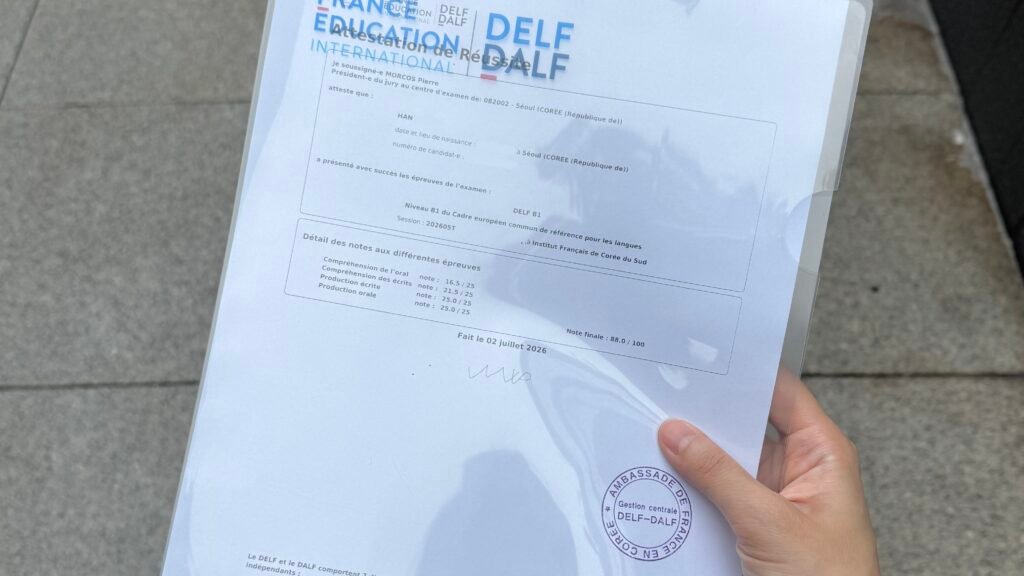
If you’re wondering how to prepare for DELF B1, you probably don’t need as many resources as you think!
I recently passed the DELF B1 with a higher score than I expected. But as anyone who has taken a language exam probably knows, doing well on a test doesn’t alwasy mean you suddenly become good at the language. I still have along way to go with French. What the score did show me, though, was that the way I prepared worked pretty well for the exam.
In this post, I’ll walk you through what I used to prepare for the DELF B1, how I studied for each section, and what ended up helping me the most. (If you’re curious about what learning French has meant to me beyond the exam, I wrote about that here!)
I’ve known French for about ten years now, but I kept starting and stopping. I would take beginner classes, drift away from French for a while, and the n com back again. I was basically stuck in the beginner stage for years.
Somewhere along the away, I even managed to pass the DELF A2. Looking back now, I honestly have no idea how I pulled that off, because I didn’t feel like I really knew French that well at the time. Still, since the end of last year, I had been doing Duolingo every day, which at least helped me keeping in touch with French.
For the DELF B1, I decided to start studying about two and a half months before the exam, but I think I actually studied properly for around one to one and a half months.
What I actually used to study for the DELF B1
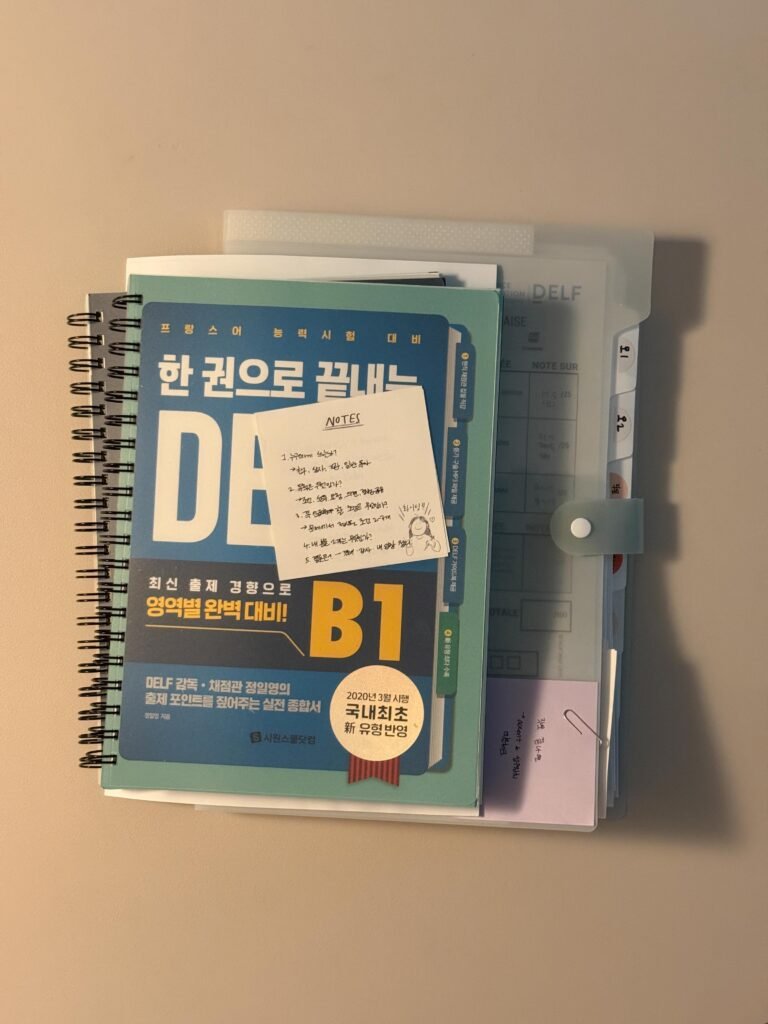
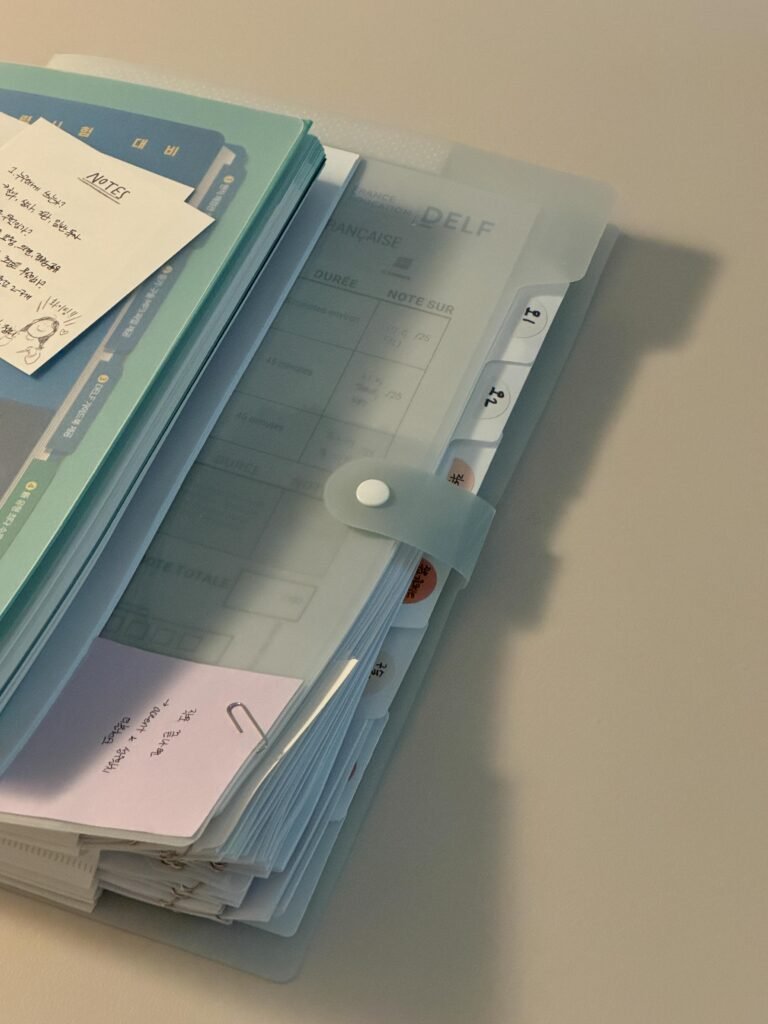
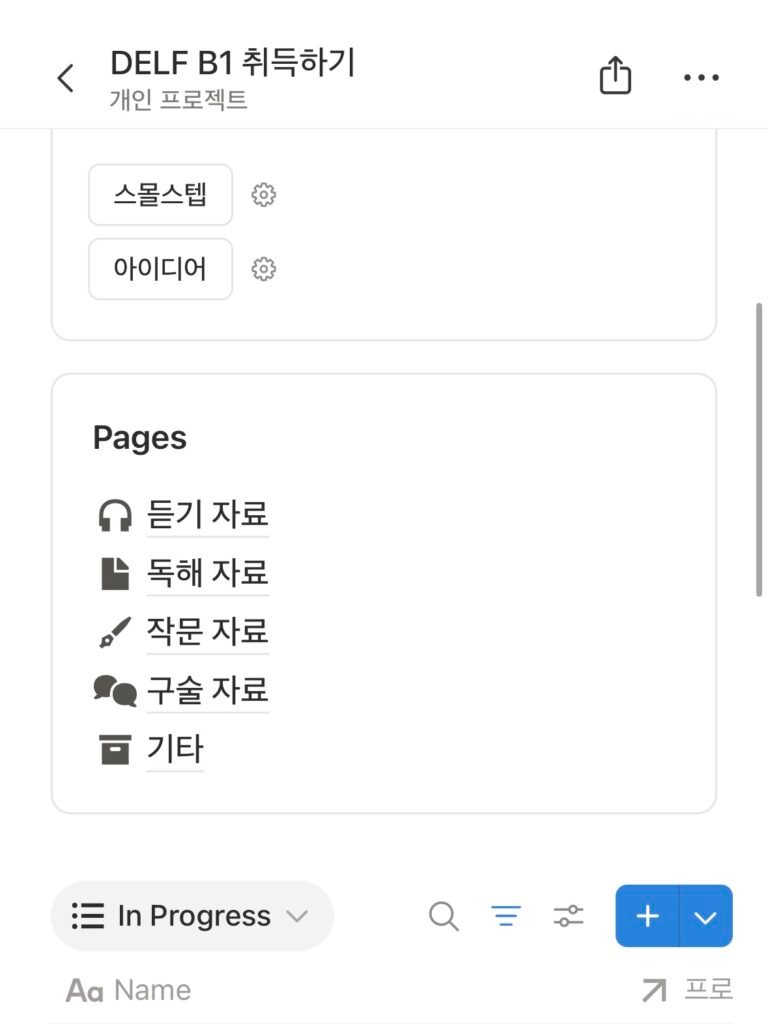
I only used two main resources: one Korean DELF B1 prep book and ChatGPT.
I used the book mostly to work through listening and reading practice questions, while I used ChatGPT to put together templates for the writing and speaking sections.
How I studied for each DELF B1 section
Listening
The first part felt fairly manageable, but I kept getting confused on the second and third ones. On top of that, I barely had enough time to read through the questions.
At some point, I realized that what I needed wasn’t more practice questions, but better basic listening skills.
So I stopped working through full practice sets for a while and picked just one short audio clip, around one or two minutes long. For several days, I listend to it over and over, shadowed it, and wrote down what I heard.
People say that doing this with even one audio clip cna suddenly make thing click. Sadly, I didn’t quite get to that magical point, but it definitely helped me when I went back to the listening questions.
Reading
For reading, I think there’s no real shortcut. I just had to keep working through passages. What helped me was skimming the text first to get the main idea before jumping into the questions.
The questions also tend to follow the order of the passage, so I found it helpful to mark the exact part of the text that supported each answer. That made it much easier to keep track of everything and not get mixed up.
Writing & Speaking
As I mentioned above, I prepared for the writing and speaking sections almost entirely with ChatGPT. I barely used the book for these, and I even skipped my French speaking lessons.
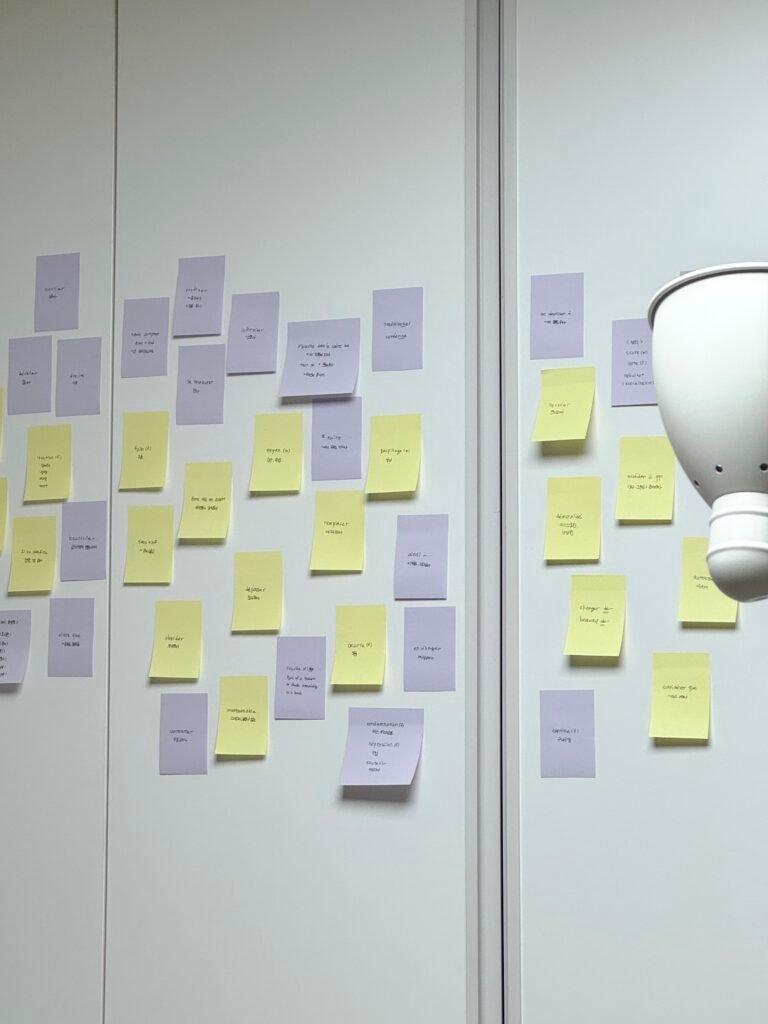
First, I looked through blog posts and gathered common DELF topics along with smaller topics that could come up under them.
Then I focused on building detailed templates around those bigger themes so that I could still come up with something even if the exact question was different from what I had practiced.
Of course, the templates didn’t magically come together in one go. There was a lot of back and forth with ChatGPT. If GPT had been a real person, it probably would have run away from me at some point.
But the process itself was useful. While putting the templates together, I kept going over the same main topics, sentence patterns, and expressions again and again.
Once the templates were ready, I tried to get the overall flow into my head. I would look only at the Korean sentence and try to write it in French, or look at a topic or question and answer it on my own. Then I just kept doing that over and over.
What helped me most / What I’d do differently
What helped me most was not collecting as many resources as possible, but sticking with a small number of them and using them repeatedly.
For writing and speaking, it also helped much more to organize recurring topics and expressions than to memorize full answers to possible exam questions. What I memorized was less about the answers themselves and more about how to build an answer.
What surprised me most was that this approach actually worekd in the real exam.
I hadn’t memorized perfect answers for every possible topic. Instead, I had practices how to put an answer together: how to organize my ideas, explain them, give examples, and reuse expressions I already knew. That made it much easier to respond even when the exact question was unfamiliar.
Next, I’d like to try preparing for the DELF B2. Or maybe I’ll simply keep learing French and look for more chances to actually use it, whether that means taking on a new project, trying something new, or finding myself in places I wouldn’t have reached otherwise.
Are you learning another language too? And if you are, what kind of new world does that language make you want to step into?